Home › How to clean an Owala water bottle
How to clean an Owala water bottle
To clean an Owala, take the lid apart, wash every part separately, and let everything dry fully before you put it back together. It takes about 5 minutes, and doing it weekly (daily if you drink anything but water) keeps mold and smells away. Carolina Arey, last reviewed September 30, 2026.
As an Amazon Associate we earn from qualifying purchases.
Quick answer
- Unscrew the lid and pull out the straw.
- Pop out the spout gasket with its pull tab.
- Wash all parts in warm, soapy water with a soft brush.
- Air-dry every part before you reassemble.
What you need
- Warm water and dish soap
- A soft sponge or a straw brush for the small gaps
- Distilled white vinegar for buildup (optional)
- A clean rack or towel for drying
Owala’s care guidance also says to avoid harsh chemicals such as bleach and abrasive scrubbers, which can damage the finish and the lid parts.
Step-by-step: how to clean an Owala
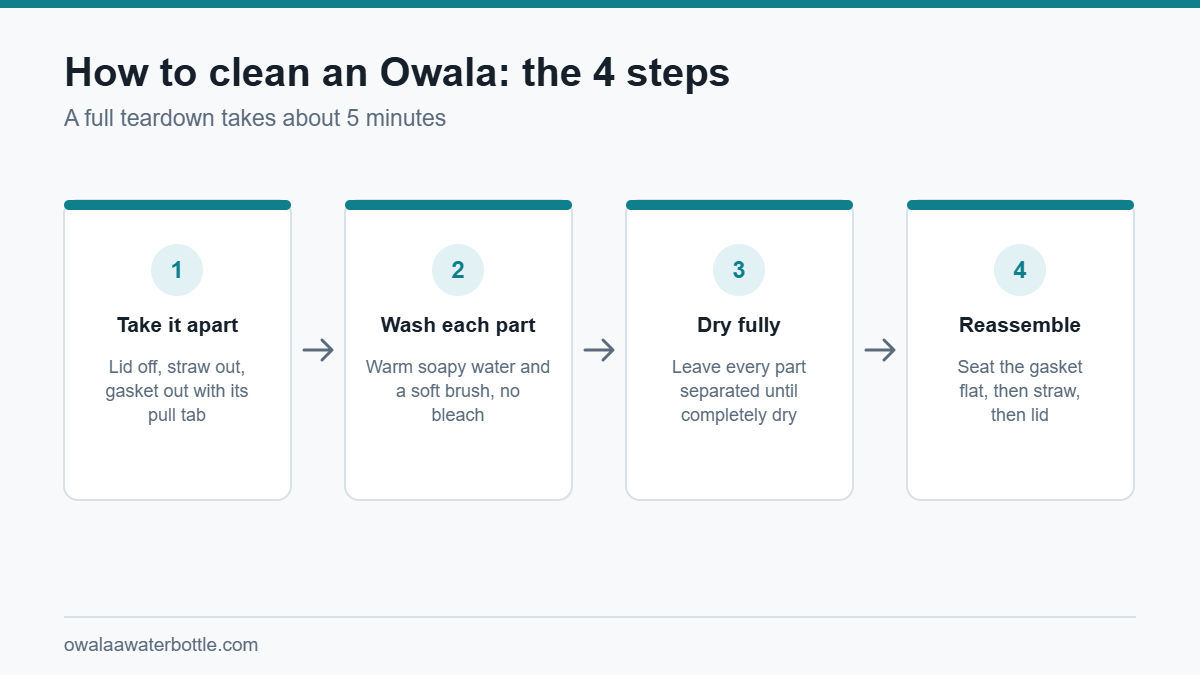
- Take it apart. Unscrew the lid and pull the straw straight out. Lift the spout cover and pull the small tab to remove the gasket, the rubber ring under the spout. This is where slime and mold collect.
- Wash the body. Fill the bottle with warm, soapy water and scrub with a soft bottle brush. For a stainless steel bottle, hand-wash it: Owala recommends this to protect the outer finish.
- Wash the lid, straw and gasket. Scrub the lid with a sponge or straw brush, including the channel where the gasket sits and around the push button. Rinse the straw with warm water and a brush.
- Dry completely. Leave every part apart on a rack until it is dry. Closing a damp bottle traps moisture, which is what causes odor.
- Reassemble. Push the gasket firmly back into its seat, insert the straw, and screw on the lid. A gasket that is not seated is the most common cause of leaks (see why your Owala is leaking).
How often should you clean an Owala?
| Situation | How often |
|---|---|
| Water only | Rinse daily, full teardown weekly |
| Juice, sports drinks, tea, coffee or smoothies | Full teardown after each day of use |
| Bottle stored damp or left in a hot car | Clean the same day |
| Kids’ bottles | Full teardown every day or two |
Owala itself recommends cleaning its bottles daily to keep them free of buildup.
Deep clean for stains and buildup
Soak the lid, straw and gasket in distilled white vinegar for a few minutes, then scrub and rinse with warm water; Owala’s care instructions suggest vinegar for buildup in spots a brush cannot reach. Cleaning tablets made for bottles are another option that Owala mentions for FreeSip bottles. For the mold and smell problem, see Owala mold and smell.
What to wash where
| Part | Hand wash | Dishwasher |
|---|---|---|
| Lid | Yes | Top rack |
| Straw | Yes | Silverware basket |
| Spout gasket | Yes | Take it out first; wash separately |
| Stainless steel body | Recommended | Technically safe; hand-wash strongly recommended |
| Tritan plastic cup | Yes | Top rack |
For details and the risks of dishwashers, read Is an Owala dishwasher safe?
Why a bottle that only holds water still needs washing
Water is clean, but mouths and hands are not. Each sip moves bacteria from your mouth to the spout, and each refill adds moisture. Cleveland Clinic physician Dr. Marianne Sumego explains that bacteria and mold thrive in moist places and that bottles have nooks, crannies and removable parts that hold them. A 2017 Purdue University study of reusable bottles on campus found that most carried high bacteria levels, and that owners who said they washed their bottle did so about once a month. Food-safety educators and doctors quoted in that coverage recommend washing a reusable bottle every day, the same as a drinking glass.
Owala’s vinegar and baking soda method, with amounts
Owala publishes one deep-clean recipe for stainless steel bottles and tumblers:
- Scrub and rinse every piece with warm, soapy water. Use a sponge or straw brush for small spaces.
- Spray or soak the pieces in distilled white vinegar and leave them for several hours.
- Mix 1 to 2 tablespoons of baking soda with 2 to 3 tablespoons of distilled white vinegar and scrub the fizzing mix in.
- Rinse the parts with warm water, or put the lid and straw on the dishwasher’s top rack.
For stains inside the cup, Owala suggests a paste of baking soda and water worked in with a bottle brush. Rinse until no vinegar smell or baking soda residue remains, or the next drink will taste of it.
Cleaning schedule by what you drink
| What goes in the bottle | After each day | Once a week |
|---|---|---|
| Water only | Wash lid, straw and cup with warm soapy water | Remove the gasket; vinegar or baking soda deep clean |
| Flavoured water, sports drinks, juice | Wash the same day; do not leave it overnight | Deep clean, and check the gasket groove for residue |
| Coffee or tea (SmoothSip Slider) | Wash soon after use so flavour does not set in the lid | Take the slider lid apart and deep clean |
Owala’s own guidance is a daily wash with warm soapy water, especially for anything other than water, and a deeper clean at least once a week.
Mistakes that damage an Owala
- Bleach and harsh chemicals. Owala’s instructions say not to use bleach or abrasives. Owala also warns that bleach can damage materials and leave residue that is hard to rinse out.
- Metal brushes and scouring pads. They scratch stainless steel. Use a soft bottle brush.
- Microwaving or boiling to sanitise. Owala’s usage guide says do not microwave, freeze or boil.
- Dishwashing the stainless steel cup. It is technically dishwasher safe, but Owala strongly recommends hand-washing to protect the finish.
- Closing the bottle while wet. Trapped moisture is what mold needs. Dry every part first.
How to dry and store an Owala
Stand the cup upside down on a rack. Leave the lid open, the straw out and the gasket beside it until all parts are dry. Store the bottle with the lid off or the cap open if you will not use it for a few days.
Wash a new Owala before the first use
Owala’s usage guide lists “Wash before using” as the first instruction. Wash the cup, lid, straw and gasket once before the first fill.
FAQ
Can I use bleach in my Owala?
No. Owala’s guidance says to avoid bleach and abrasive cleaners; use warm soapy water, and vinegar for buildup.
How do I clean the straw?
Pull it out of the lid and scrub it with a straw brush and warm soapy water, or put it in the dishwasher’s silverware basket.
What is the small rubber ring under the spout?
It is the spout gasket. It seals the spout so the lid stays leak-proof, and it needs to come out for cleaning.
Do Owala Twist, Tumbler and SmoothSip bottles clean the same way?
The idea is the same: take the lid, straw, slider or key and gasket apart and wash each one. Check the care guide for your exact model.
How long should I soak Owala parts in vinegar?
Owala’s instructions say to leave the parts in distilled white vinegar for several hours, then scrub and rinse.
Can I use cleaning tablets in an Owala?
Yes. Owala lists bottle cleaning tablets as a third option beside baking soda and vinegar. Follow the tablet maker’s soak time and rinse well.
Related guides: How to clean an Owala lid and gasket, Owala mold and smell, Is an Owala dishwasher safe?, Why is my Owala leaking?
Sources: Owala FAQ, Owala: how to clean a stainless steel FreeSip, Owala: how to clean a stainless steel FreeSip, Owala: how to clean a stainless steel tumbler, Cleveland Clinic: can your reusable water bottle make you sick, Discover Magazine: how often to wash a reusable bottle
Next step: Owala accessories, Owala replacement lid, Which Owala should I buy